Store-bought moss sprays don’t work as well as professional treatment. They contain active ingredients at just 0.5%–2% concentration, while effective moss elimination requires 5%–10% for established colonies. You’re likely treating surface discoloration while leaving rhizoids intact in porous materials, allowing regrowth within weeks. DIY products also skip mechanical removal and moisture correction — factors that drive reinfestation. Professional treatments inhibit regrowth for 12–24 months versus 3–6 months for retail sprays. There’s much more to this comparison worth knowing.
Key Takeaways
-
Store-bought moss sprays contain only 0.5%–2% active ingredients, while effective treatments require 5%–10% concentrations for established moss colonies.
-
DIY sprays leave rhizoids intact in porous materials, allowing moss to regrow within weeks of treatment.
-
Professional treatments inhibit regrowth for 12–24 months, whereas store-bought alternatives provide only 3–6 months of protection.
-
Professionals use pressure-calibrated delivery systems ensuring uniform penetration, while hand-spraying causes inconsistent coverage and incomplete moss elimination.
-
DIY sprays are only suitable for light surface colonization under 10%, on flat, accessible, non-porous surfaces.
How Store-Bought Moss Sprays Actually Work
Most store-bought moss sprays rely on potassium salts of fatty acids, zinc sulfate, or iron sulfate as their active ingredients.
These compounds disrupt cellular membranes or interfere with photosynthesis, causing moss to desiccate and die. The chemical composition determines both effectiveness and surface compatibility, so you’ll need to match the formula to your specific surface material.
Application techniques matter greatly. You apply the spray directly onto dry moss, allowing the active ingredients to penetrate the tissue.
Most products require 24–48 hours of dry weather post-application to work effectively. Rain washes the chemicals away before absorption completes, reducing efficacy considerably.
You’re also treating visible moss only. Store-bought sprays don’t address the underlying spores embedded deeper within roofing materials or concrete pores, leaving regrowth highly probable. Additionally, moss thrives in moist environments, making preventive measures crucial for long-term control.
Why DIY Moss Treatments Often Fall Short
Even if you choose the right active ingredient, you’ll likely undermine your results by skipping surface preparation—dead organic debris and biofilm block chemical penetration, rendering the treatment largely ineffective.
Most store-bought formulations also come in fixed concentrations calibrated for light, preventative use, not the dense, established moss colonies common on Portland rooftops and hardscapes.
Without addressing the underlying moisture conditions and following up with mechanical removal, you’ll find the moss returns within a single growing season. Additionally, the importance of moss removal is often overlooked, as it significantly impacts long-term roof health and aesthetics.
Surface Prep Often Ignored
One reason DIY moss treatments consistently underperform is that they skip surface preparation entirely.
Applying spray directly onto unprepared surfaces is one of the most common oversights homeowners make. Without proper surface preparation, active ingredients can’t penetrate moss colonies effectively, reducing chemical contact and limiting results.
Skipping prep leaves these critical variables unaddressed:
-
Loose debris and dead moss layers block chemical absorption
-
Existing moisture levels affect how solutions bind to surfaces
-
Surface porosity determines penetration depth and dwell time
-
Underlying algae or biofilm accelerates moss regrowth post-treatment
You’re fundamentally applying product over a barrier rather than the problem itself.
Professional treatments always begin with a systematic prep phase, ensuring the active solution reaches the root structure where elimination actually occurs.
Wrong Concentration, Weak Results
Store-bought moss sprays typically contain active ingredients like potassium salts of fatty acids or zinc sulfate at concentrations ranging from 0.5% to 2%—far below the 5% to 10% thresholds often required to penetrate established moss colonies at the rhizoid level.
These concentration errors mean you’re applying ineffective ingredients that address surface discoloration without destroying the moss’s anchoring structures. Rhizoids embedded in porous concrete, shingles, or wood fibers remain intact, allowing regrowth within weeks.
Professional-grade formulations are calibrated to specific moss species, surface porosity, and environmental conditions—variables that consumer products don’t account for.
When you apply an underpowered solution, you’re fundamentally slowing visible growth temporarily while the biological root system continues expanding beneath the surface, compounding long-term structural damage.
Moss Returns Without Treatment
Underpowered concentrations don’t just delay results—they set the stage for accelerated regrowth. When you disrupt the moss life cycle without eliminating it, surviving spores and rhizoids recolonize treated surfaces rapidly.
Environmental factors like shade, moisture retention, and organic debris create ideal conditions for reinfestation within weeks.
Without addressing root-level biological structures, you’re treating symptoms, not causes. Store-bought sprays rarely penetrate deep enough to neutralize the full colony.
Conditions that accelerate moss return include:
-
Persistent shade reducing surface drying time
-
Residual spore populations surviving partial treatments
-
Nutrient-rich debris like leaf litter feeding regrowth
-
Unmodified surface pH leaving substrates biologically hospitable
Professional treatment disrupts the complete moss life cycle, greatly extending the interval between cleanings and delivering measurable, lasting results.
What Professional Moss Removal Actually Involves
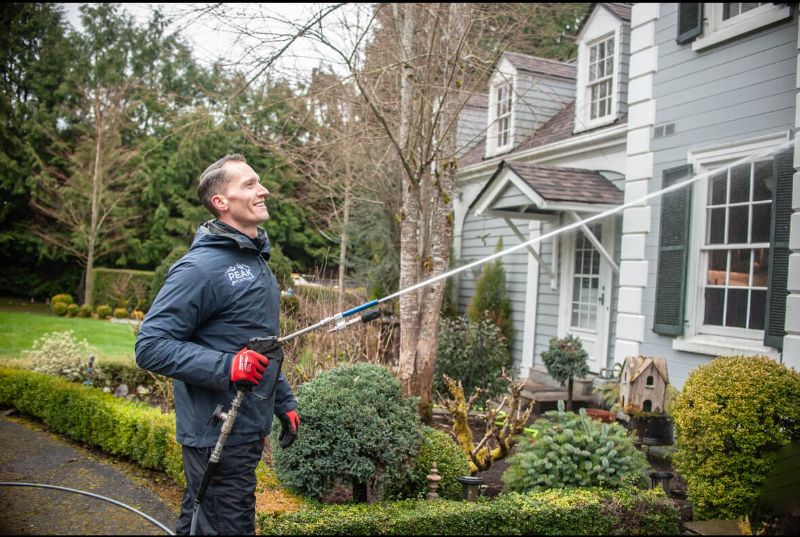
When you hire a professional moss removal service, the process begins with a complete surface assessment to identify moss density, root penetration depth, and underlying surface conditions. That diagnostic step determines which treatment methods, chemical concentrations, and application techniques will produce lasting results rather than temporary suppression. Professionals then execute a multi-step treatment process that typically combines mechanical removal, targeted biocide application, and post-treatment preventative measures tailored to your specific surface material. Additionally, they may recommend regular maintenance to help sustain roof integrity and appearance in the long term.
Complete Surface Assessment First
Professional moss removal starts with a complete surface assessment—something store-bought sprays skip entirely.
Before any treatment begins, a technician evaluates your specific surface types and conditions to determine the most effective approach. This step directly influences treatment effectiveness—what works on asphalt shingles differs greatly from what works on concrete or wood.
A thorough assessment identifies:
-
Moss species and growth stage — determines chemical concentration and dwell time required
-
Surface porosity and condition — affects application method and pressure levels
-
Underlying moisture sources — addresses root causes, not just visible symptoms
-
Surrounding vegetation and drainage — prevents runoff damage and chemical contamination
Without this diagnostic step, you’re applying a generic solution to a problem that requires precise, site-specific intervention.
Store-bought sprays never account for these variables.
Multi-Step Treatment Process
Unlike the single-step application store-bought sprays rely on, professional moss removal involves four distinct treatment phases, each building on the last to guarantee complete eradication rather than surface-level suppression.
First, technicians mechanically agitate and remove existing moss colonies.
Second, they apply professional-grade biocides calibrated to penetrate the moss life cycle at its reproductive stage.
Third, they rinse surfaces using controlled pressure appropriate to the substrate.
Fourth, they apply preventative treatment that inhibits spore germination for months afterward.
Treatment timing is equally critical.
Professionals schedule applications during ideal moisture and temperature conditions, maximizing chemical absorption and kill rates.
Store-bought sprays skip most of these phases entirely, which explains why moss consistently returns within a single growing season despite repeated consumer applications.
Store-Bought vs. Professional: A Side-by-Side Comparison
Choosing between a store-bought moss spray and professional treatment comes down to three measurable factors: active ingredient concentration, application method, and long-term efficacy.
Store-bought effectiveness is limited by diluted formulations and inconsistent coverage. Professional advantages include higher-concentration biocides, pressure-calibrated delivery systems, and trained application techniques.
Consider the key differences:
-
Concentration: Professional-grade solutions contain 2–4x higher active ingredient levels than retail products.
-
Coverage: Pressurized equipment guarantees uniform surface penetration versus inconsistent hand-spraying.
-
Residual protection: Professional treatments typically inhibit regrowth for 12–24 months versus 3–6 months for store-bought alternatives.
-
Surface safety: Professionals calibrate pressure and chemistry to prevent substrate damage.
You’re not just paying for product—you’re paying for precision, experience, and measurably longer-lasting results. Additionally, professional services often integrate preventative measures to reduce future moss growth effectively.
When Is DIY Moss Spray Even Worth Trying?
DIY moss spray earns its place under a narrow set of conditions: light surface colonization (less than 10% coverage), flat or low-pitch accessible surfaces, and non-porous substrates where penetration depth isn’t a concern.
If your moss growth meets these criteria, DIY solutions can offer a reasonable cost comparison advantage—retail treatments typically run $15–$40 versus professional service costs.
Seasonal timing also matters. Applying in early spring or late fall, when moss is actively metabolizing moisture, increases chemical uptake and improves efficacy.
On concrete patios or smooth walkways with minimal colonization, you’ll likely see acceptable results within two to four weeks. Regular maintenance of roofs and gutters helps ensure that conditions do not favor rapid moss regrowth.
Outside these conditions, however, DIY approaches frequently underperform, allowing moss to reestablish faster than the treatment cycle justifies economically.
The Real Cost of Choosing the Wrong Moss Treatment
When you pick the wrong moss treatment, you don’t just waste money on a product that fails—you risk accelerating the damage you were trying to prevent. Incorrect treatment timing, improper application, or using low-concentration formulas can allow moss growth to continue unchecked beneath a surface-level chemical reaction.
Hidden costs of the wrong treatment include:
-
Surface degradation from repeated acidic or alkaline product misapplication
-
Structural moisture retention caused by incomplete moss removal
-
Premature material failure on shingles, wood, and concrete
-
Compounding remediation costs when delayed treatment allows deeper biological infiltration
Each failed attempt gives moss growth additional time to penetrate porous surfaces.
Treatment timing isn’t just a convenience factor—it’s a structural one. Choosing incorrectly compounds both biological damage and your long-term repair expenses.
Frequently Asked Questions
Can Moss Grow Back Faster After Using Store-Bought Sprays?
Yes, moss growth can rebound faster after store-bought spray effectiveness fades, as these products don’t address root systems. You’re left with surface-level results, allowing moss to regrow more aggressively within weeks.
Are Moss Treatments Safe for Pets and Children Playing Outside?
Many store-bought moss treatments raise moss toxicity concerns, as they contain harsh chemicals harmful to pets and children. You’ll want to implement pet safety measures by keeping them off treated surfaces until products fully dry.
Does Moss Removal Improve a Home’s Resale Value Significantly?
Yes, moss removal greatly boosts your home’s resale value. It enhances home aesthetics, directly influencing buyer perception. Studies show clean exteriors can increase offers by up to 10%, making professional treatment a smart, evidence-backed investment.
How Often Should Professional Moss Treatment Be Scheduled Each Year?
You should schedule professional moss treatment once or twice yearly, aligning with moss growth cycles — ideally in early fall and spring. This timing maximizes treatment effectiveness, preventing regrowth before spores establish and protecting your home’s exterior surfaces long-term.
Will Moss Removal Void Any Existing Roof Warranty or Guarantee?
Improper moss removal can void your warranty, but professional treatment’s effectiveness minimizes that risk. You’ll want to verify warranty implications with your manufacturer, as certified technicians typically use approved methods that preserve your roof’s guarantee.
Conclusion
When moss coverage exceeds surface-level growth, store-bought sprays simply can’t deliver the penetration depth or residual protection that professional treatment provides. You’re dealing with a biological organism actively degrading your roofing substrate — that requires systematic removal, not temporary suppression. Evidence consistently shows that professional intervention reduces moss recurrence rates considerably longer than DIY applications. If you’re serious about protecting your roof’s structural integrity, investing in professional treatment is the measurably superior choice.