Living near Blue Lake and the Columbia River exposes your property to a uniquely humid microclimate that accelerates biological growth on nearly every exterior surface. Standing water, heavy rainfall, and lake-effect humidity create conditions where moss, algae, and mold thrive year-round. Without consistent moisture management, these organisms compromise your roof, siding, decking, and concrete faster than you’d expect. Keep going to understand exactly what’s at stake and how to protect your property.
Key Takeaways
-
Fairview’s proximity to Blue Lake and the Columbia River creates a humid microclimate that accelerates biological growth on property surfaces.
-
Standing water, heavy rainfall, and lake-effect humidity promote moss, algae, and mold growth that compromises structural integrity.
-
Wood decks, roof shingles, concrete, and vinyl siding are especially vulnerable to moisture-driven biological damage in lakeside environments.
-
Biological growth compounds damage over time, making early identification and intervention critical for maintaining property value and structure.
-
Lakeside homeowners typically require professional cleaning every 6–12 months to effectively manage Fairview’s elevated moisture conditions.
Why Fairview’s Lakeside Location Breeds Moisture Problems
Fairview’s proximity to Blue Lake and the Columbia River creates a persistently humid microclimate that accelerates biological growth on exterior surfaces. Elevated ambient moisture levels promote moss, algae, and mold colonization on roofing, siding, concrete, and wood structures faster than in drier inland areas.
You’re dealing with conditions where standing water, heavy seasonal rainfall, and lake-effect humidity combine to saturate porous exterior materials year-round. Without deliberate moisture management, organic buildup embeds deeply into surfaces, compromising structural integrity and accelerating deterioration. Regular roof moss removal is crucial to preserving roof lifespan and mitigating these effects.
Effective prevention strategies require you to address not just visible contamination but the underlying conditions enabling it. Regular professional cleaning cycles, appropriate surface treatments, and routine inspections form the foundation of protecting lakeside properties from Fairview’s uniquely aggressive moisture environment.
The Surfaces Hit Hardest by Lakeside Humidity
Lakeside humidity doesn’t damage all surfaces equally—some materials absorb moisture aggressively and deteriorate far faster under Fairview’s wet conditions.
Understanding surface vulnerabilities helps you prioritize cleaning and maintenance before damage compounds.
Wood decks and fences absorb lakeside humidity deeply, accelerating rot, warping, and mold colonization within the grain.
Roof shingles trap moisture underneath algae and moss layers, degrading the underlayment structurally.
Concrete driveways and walkways develop porous surface cracks where moisture penetrates, then expands during freeze-thaw cycles.
Vinyl siding harbors mildew along seams and panel overlaps, while gutters collect organic debris that retains constant moisture against your fascia boards.
Each of these surfaces requires specific cleaning approaches. Regular gutter cleaning frequency can prevent water accumulation and reduce the risk of damage.
Ignoring their individual vulnerabilities means moisture damage progresses silently until repairs become considerably more expensive than routine professional maintenance.
Moss, Algae, and Mold: What’s Actually Growing on Your Home
What’s coating your home’s exterior isn’t a single organism—it’s typically a layered ecosystem of moss, algae, and mold, each thriving under different moisture conditions and causing distinct types of damage.
Moss identification starts with recognizing dense, root-like structures that physically lift shingles and surface coatings. Algae appears earlier in the cycle, often as dark streaks or green discoloration on siding and roofing—algae prevention is most effective at this stage before root penetration occurs.
Mold develops beneath both, feeding on organic debris and moisture trapped by the upper layers. Each organism compounds the damage caused by the other.
In Fairview’s lakeside environment, this cycle accelerates considerably, making early identification and intervention critical to protecting your home’s structural integrity and surface materials. Regular cleaning serves as preventative care to combat these organisms effectively.
How Moisture Damage Quietly Destroys Curb Appeal and Value
Once moss and algae establish themselves on your Fairview home, the biological staining they leave behind spreads aggressively across siding, roofing, and hardscapes, darkening surfaces and signaling neglect to potential buyers.
Appraisers and real estate professionals consistently link visible biological growth to measurable reductions in property value, making what seems like a cosmetic issue a genuine financial liability.
Worse, what you can’t see often causes the most damage—moisture trapped beneath moss colonies and algae films steadily degrades wood framing, roofing substrates, and masonry, turning a surface-level problem into costly structural repair. Additionally, prolonged moisture exposure can lead to leaks and wood rot, further compounding the damage.
Stains That Spread
Moisture damage rarely announces itself—it spreads quietly across your siding, concrete, and roofline long before you notice a problem.
In Fairview’s lakeside environment, elevated humidity accelerates biological growth, causing algae, mold, and moss to migrate across surfaces systematically. What begins as a small dark streak on your fascia quickly colonizes adjacent materials, compounding the aesthetic impact and structural risk simultaneously.
Without preventive measures, these stains penetrate porous surfaces like wood, concrete, and composite siding, making removal increasingly difficult over time.
Organic growth retains moisture against your home’s exterior, accelerating deterioration beneath the surface layer. You’re not just dealing with discoloration—you’re facing active material degradation.
Addressing staining early, before it spreads laterally across multiple surfaces, markedly reduces remediation costs and preserves your property’s long-term condition.
Moss Lowers Property Value
Visible staining and biological growth don’t just compromise your home’s structural integrity—they directly suppress its market value. Appraisers and buyers factor exterior condition into their assessments, and moss-covered roofs, stained siding, or algae-streaked concrete signal deferred property maintenance. That perception translates into lower offers and longer listing times.
Moss retains moisture against roofing materials and wood surfaces, accelerating degradation that compounds over time. By the time buyers notice it, structural damage may already be progressing beneath the surface.
Professional moss removal addresses both the visible growth and the underlying biological root systems that standard rinsing leaves behind.
In Fairview’s high-moisture environment, proactive maintenance isn’t optional—it’s a financial strategy. Protecting your property’s appearance directly protects its assessed and resale value.
Hidden Structural Deterioration
Structural deterioration rarely announces itself—it advances quietly behind walls, beneath shingles, and under deck boards while your property’s exterior still looks manageable from the street.
Fairview’s lakeside humidity accelerates this process considerably. Hidden moisture infiltrates wood framing, fascia boards, and subflooring long before surface staining becomes visible, compromising structural integrity without triggering obvious warning signs.
Which Cleaning Methods Work Best on Waterlogged Exteriors
When your Fairview home sits near the lake, the exterior surfaces take on a different kind of grime—one that’s saturated, biologically active, and resistant to standard cleaning approaches.
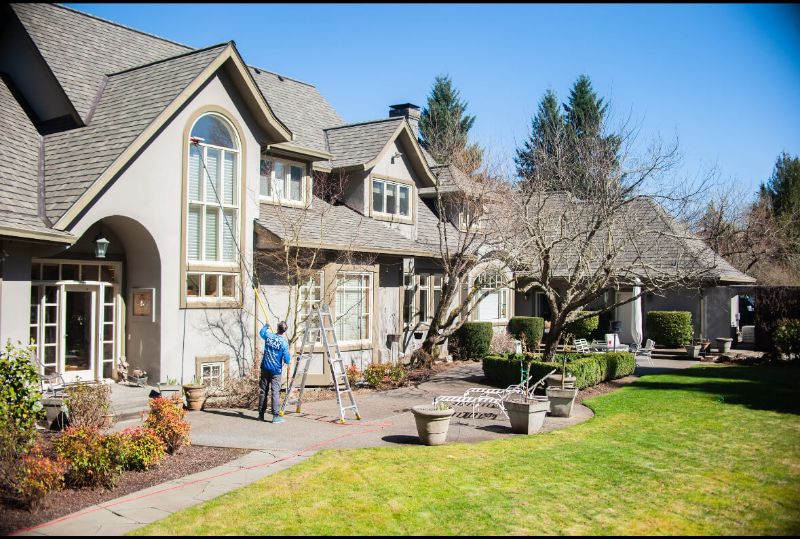
Soft washing outperforms high-pressure methods on waterlogged siding, applying low-pressure water combined with biodegradable surfactants that penetrate and neutralize algae, mold, and biofilm at the root level. This approach maximizes pressure washing effectiveness without forcing moisture deeper into compromised surfaces.
For concrete, driveways, and hardscapes, controlled hot water pressure washing removes embedded organic matter efficiently.
Eco-friendly techniques remain critical here—lakeside runoff carries cleaning agents directly into adjacent waterways, making biodegradable solutions non-negotiable. Regular inspections are also essential for identifying potential issues that may arise from excessive moisture exposure.
Pairing the right pressure settings with appropriate chemical concentrations guarantees you’re eliminating biological growth without accelerating surface erosion or contributing to environmental contamination downstream.
How Often Fairview Lakeside Homes Need Professional Cleaning
Choosing the right cleaning method solves half the problem—the other half is knowing how frequently you need to apply it. For Fairview lakeside properties, cleaning frequency isn’t optional—it’s structural maintenance. Moss, algae, and mold accumulate faster near water, so annual cleaning isn’t enough. Most lakeside homeowners need professional exterior cleaning every six to twelve months, depending on sun exposure and surface material.
Seasonal maintenance matters here more than anywhere else. Schedule a thorough cleaning in late spring after peak rainfall and again in early fall before wet conditions return.
Gutters need clearing at least twice annually. Roofs and siding require inspection after heavy storm seasons. Delaying service lets biological growth penetrate surface materials, compounding repair costs considerably over time.
Frequently Asked Questions
Does Homeowners Insurance Cover Moisture Damage From Lakeside Environments?
Most policies won’t fully cover moisture damage from lakeside environments. You’ll need to review your coverage limits carefully and watch for policy exclusions that typically deny claims tied to gradual environmental moisture accumulation.
Can Lakeside Moisture Problems Affect Indoor Air Quality Too?
Yes, lakeside moisture infiltrates your home, degrading indoor air quality through mold growth and allergen spread. You’ll need proactive mold prevention measures and effective ventilation strategies to control humidity levels and safeguard your household’s respiratory health.
Are Certain Paint Types More Resistant to Fairview’s Humid Conditions?
Yes, you’ll find that humidity resistant paints and waterproof coatings — like elastomeric and acrylic-latex formulas — outperform standard paints in Fairview’s moist conditions. They repel moisture effectively, reducing peeling, mold growth, and surface degradation on your exterior walls.
Do Lakeside Properties Sell for Less Due to Moisture-Related Wear?
Lakeside properties don’t automatically sell for less, but moisture assessment results directly impact property valuation. If you’ve neglected exterior surfaces, buyers’ll factor visible wear into offers, potentially reducing your selling price considerably.
Can Landscaping Choices Help Reduce Moisture Buildup Around My Home?
Yes, your landscape design directly impacts moisture management. You can slope soil away from your foundation, choose water-absorbing plants, and install drainage features to actively redirect water and reduce buildup around your home.
Conclusion
Your lakeside property in Fairview isn’t fighting ordinary moisture — it’s contending with relentless humidity, biological growth, and accelerated surface degradation that inland homes simply don’t face. You’ll need consistent professional cleaning schedules, appropriate pressure or soft-wash techniques matched to each surface, and early intervention before moss, algae, and mold compromise structural integrity. Waiting doesn’t save money — it multiplies repair costs. Protecting your investment means treating lakeside moisture management as ongoing maintenance, not an occasional fix.