Your pressure washing quote is shaped by several key factors: the size and surface type of your property, how much buildup or biological growth is present, and the complexity of the service required. Accessibility, your location, and regional labor rates all influence the final number too. A legitimate quote breaks every variable down transparently — no vague flat-rate figures. Keep going to understand exactly what you’re paying for and why.
Key Takeaways
-
Property size, surface material, and soil level directly affect labor time, water usage, and cleaning solution strength needed for the job.
-
Service complexity—such as roof cleaning, moss removal, or solar panel care—requires specialized techniques that increase overall quote pricing.
-
Travel distance from the contractor’s base and regional market conditions influence final pricing through surcharges and local labor rates.
-
Climate-driven buildup of moss, algae, and mildew increases cleaning frequency and costs, especially in wetter regions like the Pacific Northwest.
-
Legitimate quotes include itemized breakdowns of surfaces, methods, and fees; vague flat-rate numbers without detail are a red flag.
The Size and Surface Type of Your Property
Two factors shape your pressure washing quote more than anything else: the size of your property and the type of surface being cleaned.
Larger surface areas require more time, water, and labor, directly increasing your cost. However, size alone doesn’t determine pricing—property materials impact the approach just as greatly.
Concrete, wood, vinyl siding, and roof shingles each demand different surface preparation techniques, equipment settings, and cleaning solutions.
Delicate materials like wood require low-pressure soft washing to prevent damage, while concrete can withstand higher PSI for deep cleaning. Treating every surface the same risks costly damage and ineffective results.
When you request a quote, expect a professional to assess both square footage and material type before providing an accurate number. A thorough evaluation also considers the average cost per square foot, which varies significantly between power washing and pressure washing.
How Dirty Is It, Really?
How heavily soiled a surface is directly affects the time, labor, and cleaning solutions required—and by extension, your final quote. A technician’s dirt assessment during an estimate isn’t arbitrary—it’s a calculated evaluation of buildup depth, surface degradation, and contamination type.
Moss, algae, and embedded grime require longer dwell times, stronger cleaning agents, and multiple passes. Light surface dirt, by contrast, cleans quickly and costs less.
Your cleaning frequency plays a direct role here. Properties cleaned annually accumulate far less buildup than those neglected for three or more years, which translates to lower labor costs and fewer chemical applications.
If your surfaces show heavy biological growth or long-term staining, expect a higher quote. That price reflects the additional work required to restore the surface properly. Additionally, regular maintenance can significantly reduce the overall cleaning costs by preventing extensive buildup over time.
Why Some Services Cost More Than Others
Not all pressure washing services carry the same price tag, and that gap comes down to technical complexity, equipment requirements, and risk.
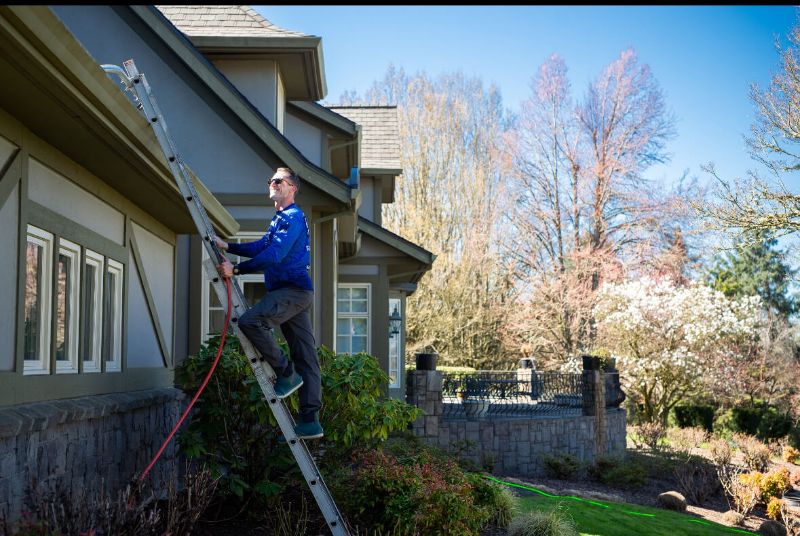
Service comparisons reveal clear differences—roof cleaning, for example, demands low-pressure soft washing, specialized detergents, and fall protection equipment, driving material costs higher than a standard driveway wash.
Moss removal requires chemical treatments that sit, dwell, and penetrate, adding both product expense and labor time.
Gutter cleaning involves hands-on debris extraction and flushing, not just surface rinsing.
Solar panel cleaning demands non-abrasive techniques to protect sensitive components.
Each service carries its own equipment setup, chemical formulation, and liability exposure.
You’re not just paying for water and pressure—you’re paying for the specific process each surface or system actually requires. Additionally, understanding the importance of regular roof cleaning can help homeowners appreciate the value of investing in these specialized services.
What Easy Access Actually Saves You
When crews can park close to your home and run hoses directly to the work area without traversing fences, gates, or landscaping, setup time drops and so does your quote.
Obstacles like secured side yards, steep grades, or cluttered pathways force technicians to reposition equipment repeatedly, adding labor time that gets reflected in the final price.
You can directly reduce your pressure washing costs by clearing access routes, opening gates, and moving vehicles or outdoor furniture before the crew arrives. Additionally, maintaining a consistent cleaning schedule can help prevent buildup that complicates the job.
Faster Setup, Lower Costs
Easy access to your property directly reduces the time a crew spends on setup, equipment repositioning, and maneuvering around obstacles—and that saved labor translates into lower costs on your quote.
When technicians can move efficient equipment directly to each surface without delay, they complete the job faster and with fewer interruptions.
Clear pathways, opened gates, and open driveways allow for quick service from the moment the crew arrives.
You won’t accumulate extra labor charges tied to problem-solving access issues on-site.
Every minute spent relocating hoses, repositioning machines, or waiting on clearance adds billable time to your project.
Keeping the work zone unobstructed is one of the simplest, most controllable factors that can keep your final pressure washing quote accurate and competitive.
Obstacles That Increase Pricing
Locked gates, parked vehicles, overgrown shrubs, and stored equipment all force technicians to spend unplanned time repositioning hoses, rerouting around barriers, or waiting for clearance—costs that land directly on your quote.
When access is restricted, labor intensity increases because every extra repositioning step consumes billable time. Tight spaces may also require additional equipment like extension wands, smaller surface cleaners, or specialized nozzles that wouldn’t otherwise be necessary.
These aren’t arbitrary charges—they reflect real operational demands your property creates.
Before your technician arrives, clear vehicles from driveways, open side gates, and move stored items away from work zones. Simple preparation eliminates friction, keeps labor intensity low, and prevents the need for additional equipment.
Clean access translates directly into a leaner, more competitive quote.
How Location Affects Your Pressure Washing Price
Your location shapes your pressure washing quote in several direct ways.
If you’re outside a contractor’s primary service area, you’ll likely pay a travel surcharge that reflects fuel, time, and scheduling inefficiencies.
Beyond distance, your regional climate determines how frequently moss, algae, and mold accumulate on your surfaces—meaning Portland homeowners, for example, face higher service frequency and costs than property owners in drier climates. This is especially true in the Pacific Northwest, where common roof contaminants like moss thrive due to the wet climate.
Travel Distance Affects Cost
Where you live relative to a contractor’s base of operations directly affects what you’ll pay for pressure washing services. Contractors factor travel time and fuel costs into their pricing, meaning properties located farther from their service hub typically receive higher quotes.
This isn’t arbitrary—mobilizing equipment, driving a loaded service vehicle, and allocating crew hours to transit all carry real operational costs.
If you’re outside a contractor’s primary service area, expect a travel surcharge or a higher base rate to offset those expenses. Conversely, properties within a contractor’s core coverage zone often benefit from more competitive pricing simply due to proximity.
When comparing quotes, ask each contractor where they’re based—it directly explains pricing differences that have nothing to do with the scope of work itself.
Local Market Pricing Varies
Many factors shape pressure washing prices, but few carry as much weight as regional market conditions. Where you live directly influences what you’ll pay.
In dense urban markets like Portland, local competition among service providers tends to drive pricing toward competitive rates, which can benefit you as a consumer. Conversely, in rural or underserved areas, fewer contractors mean higher baseline costs.
Pricing trends also shift based on regional labor rates, cost of living, and seasonal demand patterns. A quote you receive in Portland won’t mirror one from a smaller surrounding community, even for identical work.
Understanding your local market helps you evaluate whether a quote reflects fair regional pricing or falls outside the reasonable range for your specific area.
Regional Climate Influences Needs
Climate plays a direct role in how frequently you’ll need exterior cleaning services and, by extension, what you’ll spend over time. In the Pacific Northwest, the climate impact on your property is significant. Portland’s wet winters accelerate moss, algae, and mildew growth on roofs, siding, and concrete surfaces far faster than drier regions experience.
Seasonal considerations matter here because buildup doesn’t pause between jobs. You’ll likely require more frequent treatments than homeowners in arid climates, which increases annual maintenance costs. However, proactive cleaning prevents deeper biological infiltration that demands more aggressive—and expensive—removal later.
Your regional environment fundamentally dictates your cleaning schedule. Ignoring climate-driven buildup doesn’t reduce your costs; it compounds them. Understanding this connection helps you budget accurately and prioritize services before minor growth becomes structural damage.
What a Legitimate Quote Actually Includes
When you request a pressure washing quote, a legitimate estimate does more than hand you a number—it breaks down exactly what you’re paying for.
Pricing transparency means the quote components should clearly identify the surfaces being cleaned, square footage, cleaning method, solutions used, and number of passes required. It should also specify whether prep work, post-rinse treatment, or surface protection is included.
Any travel fees, access surcharges, or add-on services need explicit line items. A vague flat-rate number with no breakdown is a red flag.
You should also confirm whether the contractor is licensed and insured—that coverage affects liability if damage occurs. A detailed, itemized quote protects you from surprise charges and gives you a clear basis for comparing competing estimates accurately.
Frequently Asked Questions
Do You Offer Discounts for Bundling Multiple Services Together?
Yes, we offer service package options that reduce your overall cost when you bundle multiple services. You’ll also benefit from customer loyalty rewards when you schedule recurring cleanings with us.
How Long Does a Typical Pressure Washing Appointment Take?
Your appointment typically runs 1–4 hours, depending on surface material considerations and the complexity of pressure washing techniques required. Larger areas or multi-surface projects naturally extend your service time beyond a standard single-surface cleaning appointment.
Should I Be Home During the Pressure Washing Service?
You don’t need to be home, but guarantee we have full property access before the appointment. If you have specific safety concerns about pets or fragile items, being present helps us address them directly.
How Often Should I Schedule Professional Pressure Washing for My Property?
Schedule professional pressure washing annually for most surfaces, but frequency factors like local climate, moss exposure, and surface materials matter. High-traffic concrete or wood decks may need service every six months for peak protection.
Do Weather Conditions Affect When My Job Gets Scheduled?
Yes, weather impacts your scheduling flexibility considerably. Rain, freezing temperatures, and high winds can delay your job, as ideal results require dry, mild conditions. We’ll work with you to reschedule promptly when necessary.
Conclusion
Now you know what’s actually driving your pressure washing quote. Surface size, contamination level, service type, site accessibility, and location all factor into the final number. When you understand these variables, you can evaluate quotes accurately and avoid paying for something you don’t need—or accepting a lowball bid that cuts corners. At Peak Pressure Washing, every quote we deliver reflects these specifics directly, so you’re getting a number grounded in real conditions, not guesswork.