Estacada’s forested properties demand more frequent moss removal because the dense tree canopy traps moisture, blocks sunlight, and keeps surfaces damp year-round. With over 60 inches of annual rainfall, moss colonies can double in surface area within a single growing season, damaging roofs, decks, and gutters faster than most homeowners anticipate. Properties near tree lines often need professional treatment every 12–18 months to stay ahead of compounding structural damage. The full picture is more detailed than it first appears.
Key Takeaways
-
Estacada’s annual precipitation exceeds 60 inches, creating persistent surface moisture that accelerates moss colonization on forested properties year-round.
-
Tree canopies reduce sunlight and evaporation, sustaining the damp conditions moss needs to establish within months.
-
Moss colonies can double in surface area within one growing season, requiring removal every 1–2 years.
-
Small moss patches migrate to gutters, siding, and walkways within two to three seasons if left untreated.
-
Estacada’s wet winters accelerate colonization, making spring and fall inspections essential for controlling rapid moss spread.
Why Estacada’s Forest Climate Accelerates Moss Growth
Estacada’s position at the edge of Mount Hood National Forest creates near-ideal conditions for moss colonization. The surrounding tree canopy limits direct sunlight, reduces surface evaporation, and sustains the prolonged surface moisture that moss ecology depends on for cellular hydration and spore germination.
Annual precipitation in this corridor routinely exceeds 60 inches, and forest moisture lingers on roofing materials, wood siding, and concrete surfaces well after rainfall ends. Shade-tolerant moss species establish within months under these conditions, not years.
Once a colony takes hold, it retains water against your surfaces, accelerating material degradation. If your property sits near tree lines or experiences consistent shade, you’re not dealing with an occasional maintenance issue — you’re managing an environment that actively promotes continuous moss growth. Regular inspections of moisture-prone areas are essential to catch moss early and prevent extensive damage.
The Surfaces Moss Damages Most on Wooded Properties
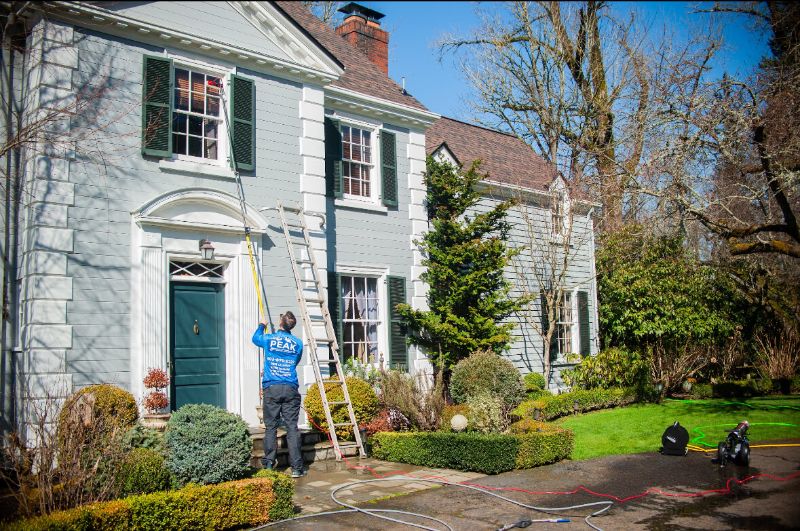
Wood decks and fences experience fiber degradation as moss rhizoids penetrate surface cells, weakening structural integrity over time.
Concrete and pavers face surface effects including freeze-thaw cracking amplified by retained moisture beneath moss colonies.
Gutters accumulate moss-driven debris, restricting drainage and causing overflow damage to fascia boards.
Solar panels lose efficiency as moss coverage blocks photovoltaic cells.
On forested properties, these surface effects compound faster due to persistent shade and organic debris. Regular cleaning schedules are essential to mitigate these issues before they escalate, helping to preserve the longevity of your property.
You’ll face considerably higher repair costs if you delay targeted moss removal on these vulnerable materials.
How Fast Moss Spreads When Left Untreated
Once moss establishes a foothold on your property, it spreads with surprising speed—a single colony can double in surface area within one growing season under ideal moisture and shade conditions.
Understanding the moss lifecycle helps explain why: spores germinate within days of landing on a damp surface, then develop rhizoids that anchor into porous materials before visible growth even appears.
Environmental factors specific to Estacada—persistent rainfall, dense canopy cover, and limited direct sunlight—compress the timeline further.
What begins as a small patch on your roof’s north-facing slope can migrate to gutters, siding, and walkways within two to three seasons.
Once interconnected colonies establish, mechanical removal becomes considerably more labor-intensive and costly, making early intervention your most effective and economical strategy. Additionally, regular moss removal is essential to prevent moisture retention that can damage roofs over time.
How Often Estacada Homes Actually Need Moss Removal
If your Estacada property sits under a heavy tree canopy, you’ll typically need professional moss removal every one to two years, compared to the three-to-five-year cycle recommended for drier, more exposed climates.
You should inspect your roof, deck, and hardscapes each spring and fall, watching specifically for early warning signs like green discoloration, soft surface texture, or visible spore clusters along shaded edges. Regular inspections help catch regrowth at these early stages, letting you treat moss before it anchors deeply into roofing material or joint gaps, where removal becomes considerably more invasive and costly.
Recommended Removal Schedules
Because Estacada sits within a high-rainfall corridor east of Portland, moss doesn’t just appear seasonally—it colonizes continuously, making removal frequency a practical necessity rather than a cosmetic preference.
Seasonal considerations matter: late summer represents your best treatment window, when moss is dormant and moisture levels are lower, improving chemical adhesion and penetration.
For heavily shaded or tree-canopied roofs, schedule professional removal every 12–18 months. Moderately exposed surfaces typically require treatment every 24 months.
A thorough property assessment should evaluate canopy coverage, roof pitch, surface material, and prevailing wind direction—all variables that directly influence recolonization rates.
Waiting for visible growth means moss has already established rhizoid anchors into your roofing substrate, accelerating material degradation and increasing remediation costs considerably.
Warning Signs of Regrowth
Recognizing regrowth early determines whether you’re dealing with a surface treatment or a full remediation.
Accurate moss identification starts with spotting pale green or grayish-black patches forming along shingle edges, grout lines, or shaded roof planes. These patches indicate active colonization, not residual staining.
Key regrowth factors include sustained humidity above 70%, persistent shade from overhanging tree canopy, and organic debris accumulation that retains moisture.
You’ll typically see filamentous threads emerging within 60–90 days post-treatment on untreated substrates.
Check north-facing surfaces and valley intersections first—these zones dry slowest and recolonize fastest.
If you notice surface texture becoming irregular or spongy underfoot on decks, biological growth has already penetrated the substrate. At that stage, treatment complexity increases considerably.
Professional Moss Removal vs. DIY on Forested Properties
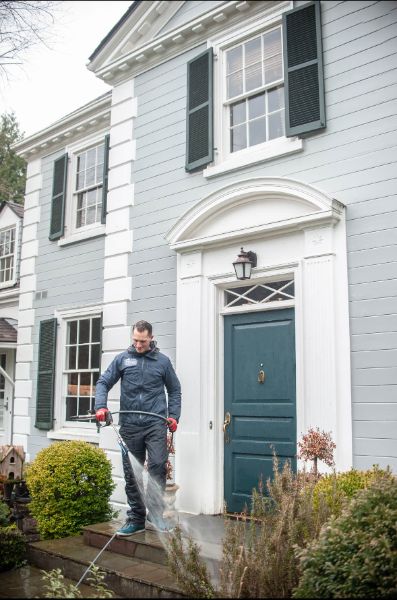
When you attempt moss removal on a forested property roof without proper training, you risk slipping on wet, moss-covered surfaces and inadvertently damaging shingles through incorrect pressure or technique. Professional crews use low-pressure soft washing systems, commercial-grade biocides, and fall-protection equipment that most homeowners can’t reasonably source or operate safely. Though the upfront cost of hiring a professional runs higher, you’ll likely spend less over time by avoiding premature roof replacement, structural repairs, and repeated failed DIY treatments. Additionally, regular inspections can help catch any underlying issues early, preventing more extensive damage.
DIY Risks on Roofs
Tackling moss removal yourself on a forested property carries risks that go beyond simple inconvenience. Wet, moss-covered surfaces reduce traction dramatically, making roof safety a serious concern the moment you step onto a pitched surface. Without proper fall protection equipment, a single misstep can result in severe injury.
Beyond physical danger, incorrect DIY tools cause compounding damage. High-pressure wands strip granules from asphalt shingles, void manufacturer warranties, and accelerate moisture infiltration. Scraping tools, when applied without technique, lift flashing and crack aging tiles.
You’re also unlikely to apply treatment solutions at the correct dilution or dwell time, leaving spores behind to recolonize within one season. On a forested property with accelerated moss growth, these errors translate directly into shortened roof lifespan and higher long-term costs.
Professional Equipment Advantages
Professional moss removal equipment operates at a fundamentally different level than anything available at a hardware store.
Professionals use low-pressure soft washing systems that deliver precise water volume and calibrated detergent concentrations, targeting moss at the root level without abrading roofing material. This advanced technology controls pressure output within narrow tolerances, preventing granule loss on asphalt shingles—damage that accelerates UV degradation and shortens roof lifespan.
You also benefit from effective techniques refined specifically for forested environments, where sustained canopy shade and organic debris create layered moss colonies rather than surface-level growth.
Professional-grade biocidal treatments penetrate deeper than consumer products, eliminating spore structures that cause rapid regrowth. Combined with proper application equipment, these methods produce measurably longer-lasting results than anything a garden hose or rented pressure washer can deliver.
Long-Term Cost Comparison
Most homeowners underestimate the true cost of DIY moss removal on forested properties because they’re calculating material expenses rather than total lifecycle costs.
Factor in equipment rental, repeated treatments, roof repair from missed infestations, and your labor hours—costs escalate quickly.
Professional moss prevention techniques eliminate redundant treatment cycles by addressing biological root causes rather than surface symptoms.
You’re paying for a thorough solution, not a temporary fix.
Consider these cost-saving strategies: professional treatments on forested properties typically extend intervals between required services by 40–60% compared to DIY approaches.
Missed applications accelerate structural degradation, converting a preventable maintenance expense into a costly repair project.
Over a five-year window, professional moss removal consistently delivers lower total expenditure than repeated DIY attempts on high-exposure, tree-canopied properties like those throughout Estacada.
Signs Your Estacada Property Is Overdue for Moss Removal
How do you know when moss has crossed the line from minor nuisance to serious property threat? Use moss identification techniques to assess coverage systematically.
If moss spans more than 20% of your roof surface, discoloration has penetrated shingle granules, or soft, spongy patches compress underfoot on walkways, you’ve exceeded cosmetic concern.
Understanding seasonal moss patterns helps you time your inspections correctly — Estacada’s wet winters accelerate colonization, meaning spring reveals the full extent of winter growth.
Additional warning signs include clogged gutters packed with moss fragments, visible lifting along shingle edges, and dark streaking on siding indicating established root systems.
If you’re noticing these indicators, moss has already begun compromising surface integrity, and delaying removal increases structural repair costs considerably.
Frequently Asked Questions
Does Moss Removal Treatment Affect Nearby Trees or Garden Plants?
When professionals apply eco-friendly treatment methods, they won’t harm your nearby trees or garden plants. You’ll find that targeted moss growth solutions are carefully formulated to eliminate moss while protecting surrounding vegetation and soil health.
Will Homeowner’s Insurance Cover Moss-Related Roof Damage in Estacada?
Most insurers won’t cover moss growth damage, classifying it as neglect rather than sudden loss. You’ll likely face denied insurance claims if moss causes roof deterioration. Prevent costly disputes by scheduling regular professional moss removal treatments proactively.
What Time of Year Is Best to Schedule Moss Removal Services?
Late winter to early spring offers ideal weather for seasonal timing of moss removal—you’ll target dormant moss before spore release, and drier conditions let treatments penetrate effectively, maximizing long-term protection on your Estacada property.
Can Moss Removal Improve My Property’s Resale Value in Estacada?
Yes, removing moss growth directly boosts your property’s resale value. It enhances property aesthetics, signals diligent maintenance to buyers, and prevents structural deterioration—factors appraisers and buyers actively evaluate when analyzing Estacada homes surrounded by dense, moisture-rich forested environments.
Are the Chemicals Used in Moss Removal Safe for Pets?
Yes, the chemicals we use prioritize chemical safety and pet health. We apply eco-friendly, biodegradable solutions that won’t harm your animals once they’ve dried, so you can trust your pets stay protected.
Conclusion
Living in Estacada’s forested environment means moss isn’t a seasonal nuisance — it’s a year-round structural threat. Your roof, siding, and hardscapes are constantly exposed to the moisture levels and canopy shade that accelerate biological growth beyond what standard maintenance schedules can manage. You’ll need removal cycles every 12–18 months to prevent material degradation. Staying ahead of moss growth isn’t optional maintenance; it’s the most cost-effective way to protect your property’s long-term structural integrity.